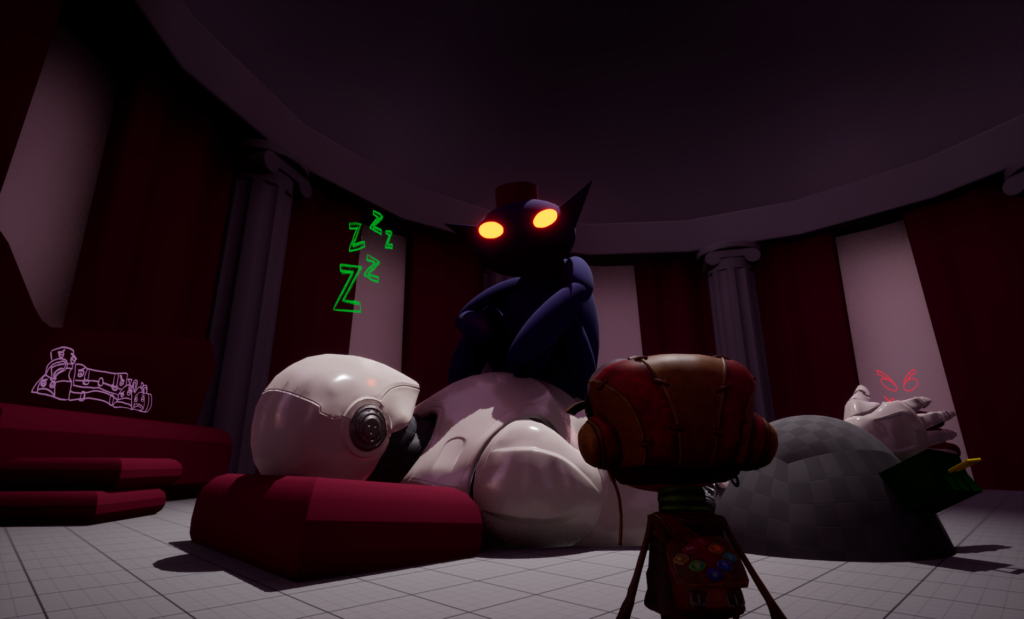
Nachtmahr
“Nachtmahr” is a Psychonauts 2 boss fight exercise based on my coursework from Marie Mejerwall’s Masterclass in Boss Design.
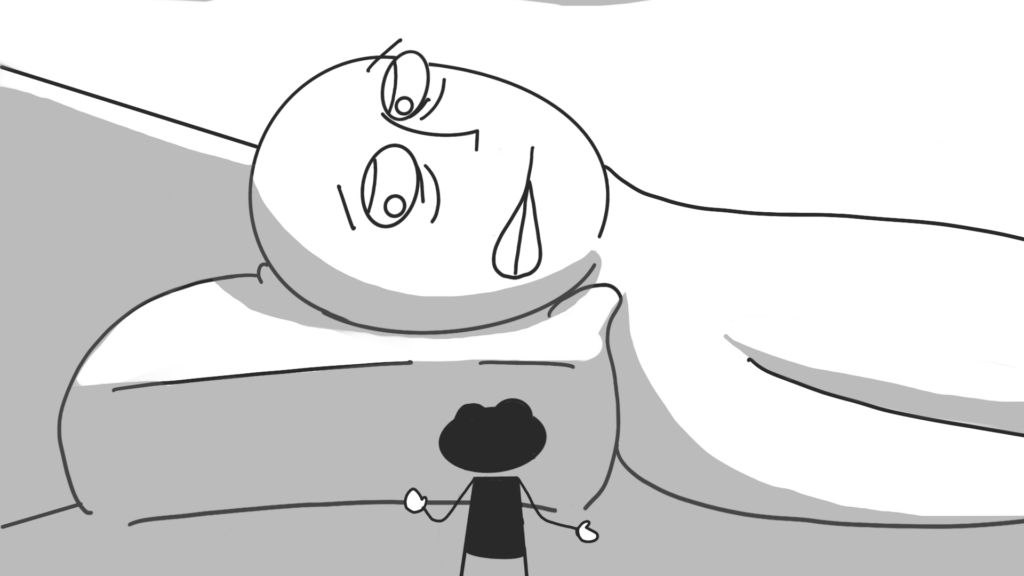
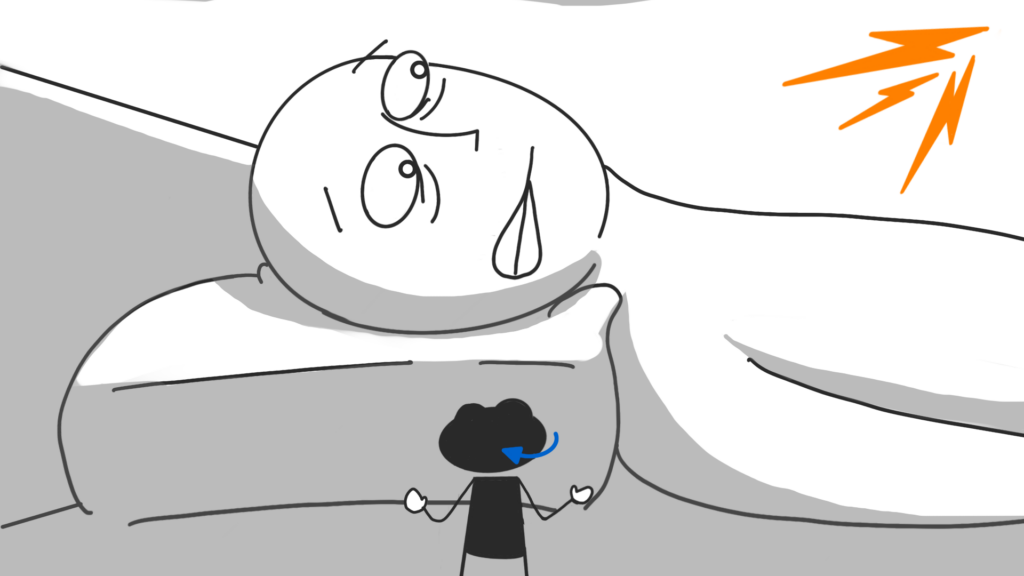
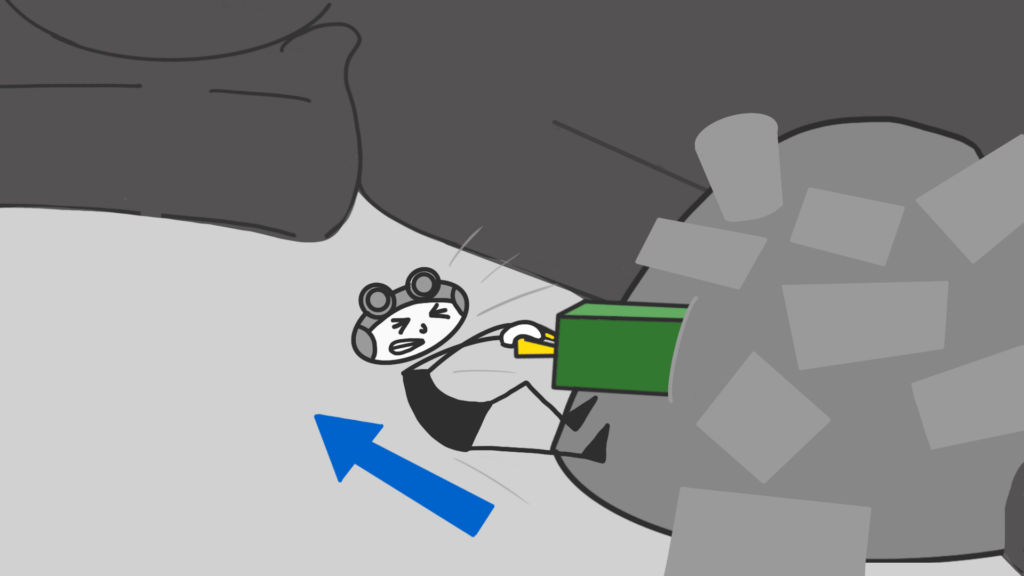
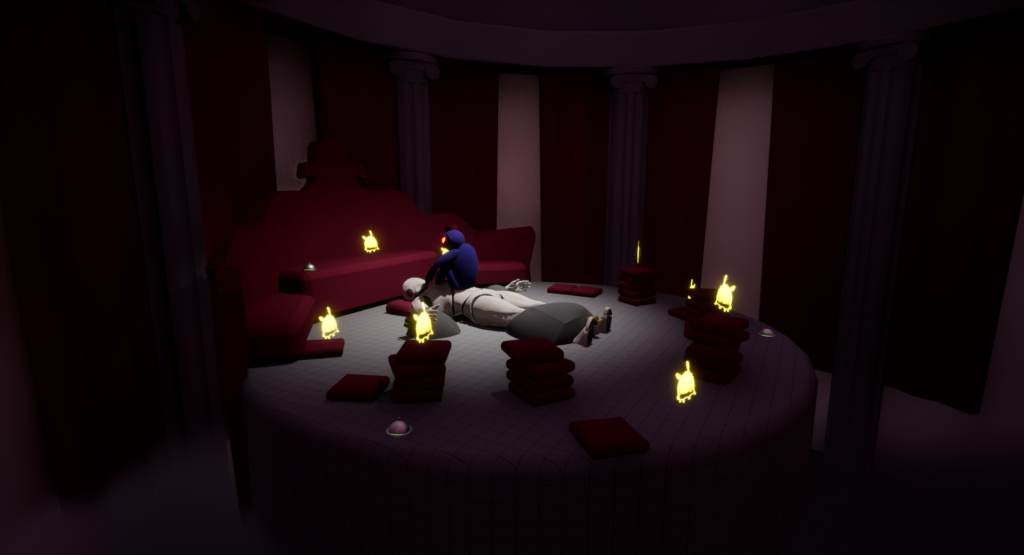
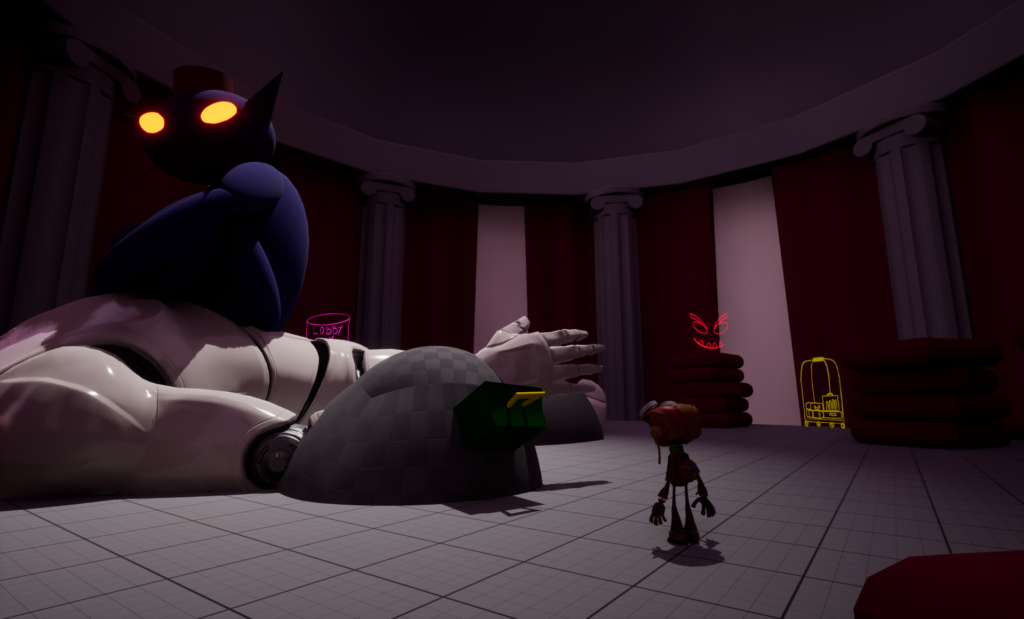
In “Nachtmahr” players find themselves in a creepy, pastel-colored hotel room. On its bed, a friendly NPC is pinned down by piles of emotional baggage and the weight of a (sleep paralysis-) demon porter sitting on his chest. Players must dislodge the baggage and defeat the boss to free their friend.
Project Goals
My goal was to design a boss fight that would match the unique themes, narrative, and style of the Psychonauts franchise as well as provide an exciting new challenge for players. Having spent most of my professional career working with Unity up to that point, I took the opportunity to familiarize myself with the modeling tools and Blueprint scripting in Unreal Engine 5.
However, recreating a fully functional prototype of the Psychonauts’ complex puzzle, movement, and combat systems was beyond the scope of this exercise.
Concept
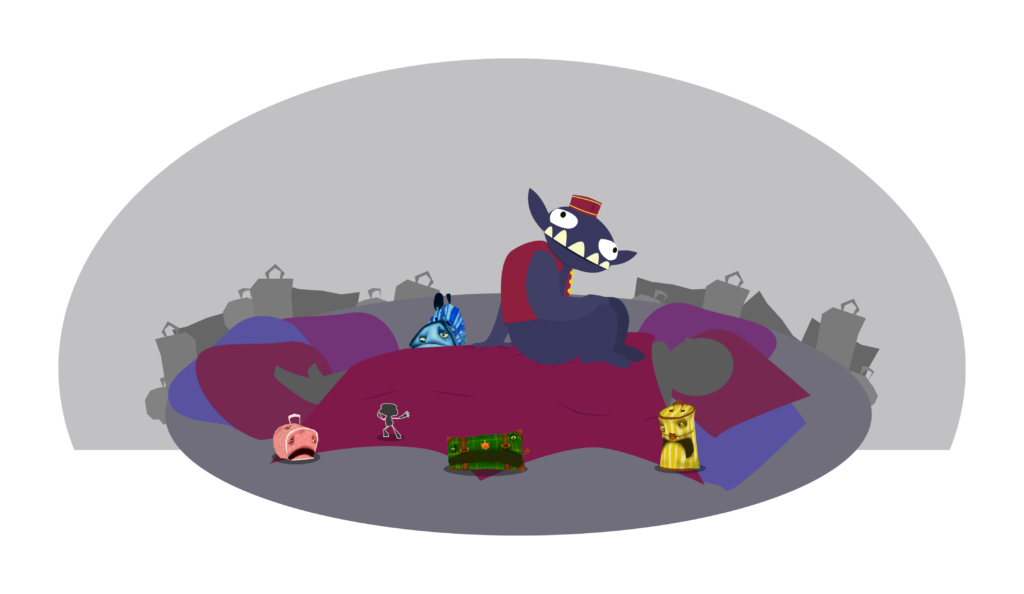
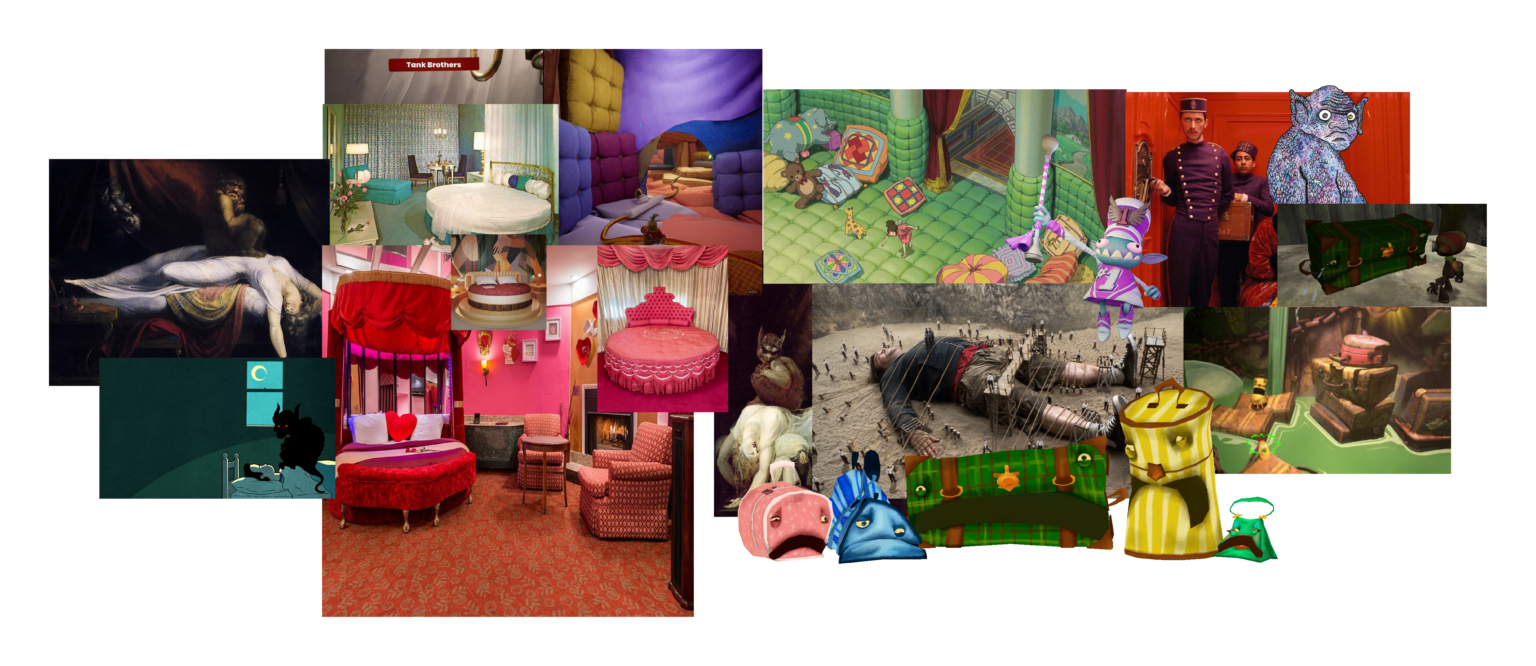
The boss is supposed to be a manifestation of mental distress, which is how many of the enemies and bosses in the IP are designed. I took inspiration from a creature from German folklore, the “Nachtmahr” (also often referred to as Mare or Alp), which sits on people’s chests while they sleep and torments them with nightmares. Additionally, I wanted to incorporate a recurring element from the Psychonauts games into the boss fight. The Emotional baggage are collectibles found in each Mental World of the games. I liked the idea of an NPC having accumulated so much of it that they are buried beneath it, unable to move and dependent on the players’ help. Combining these two ideas led me to the (sleep paralysis-) demon porter and the hotel theme for the boss arena.
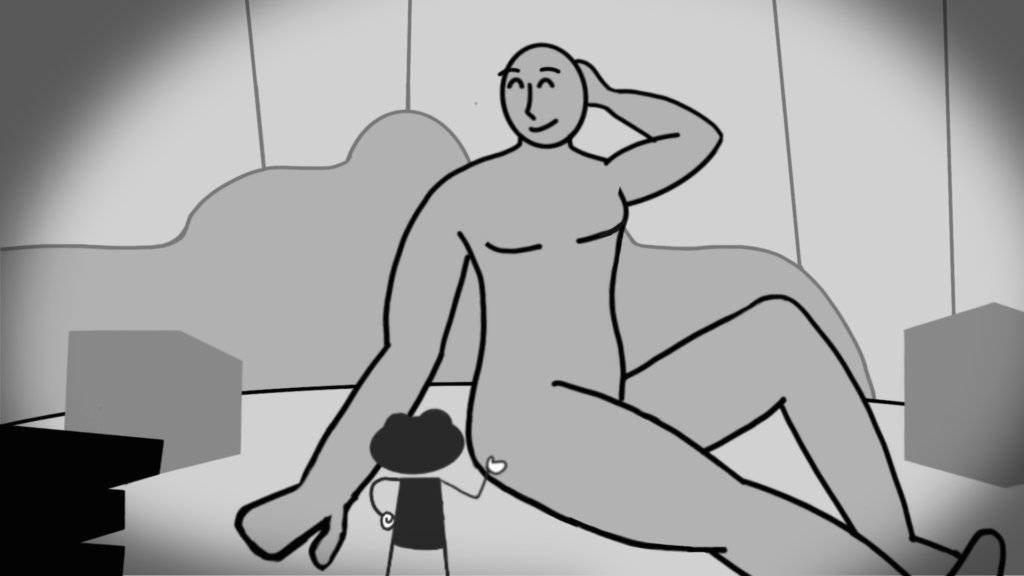
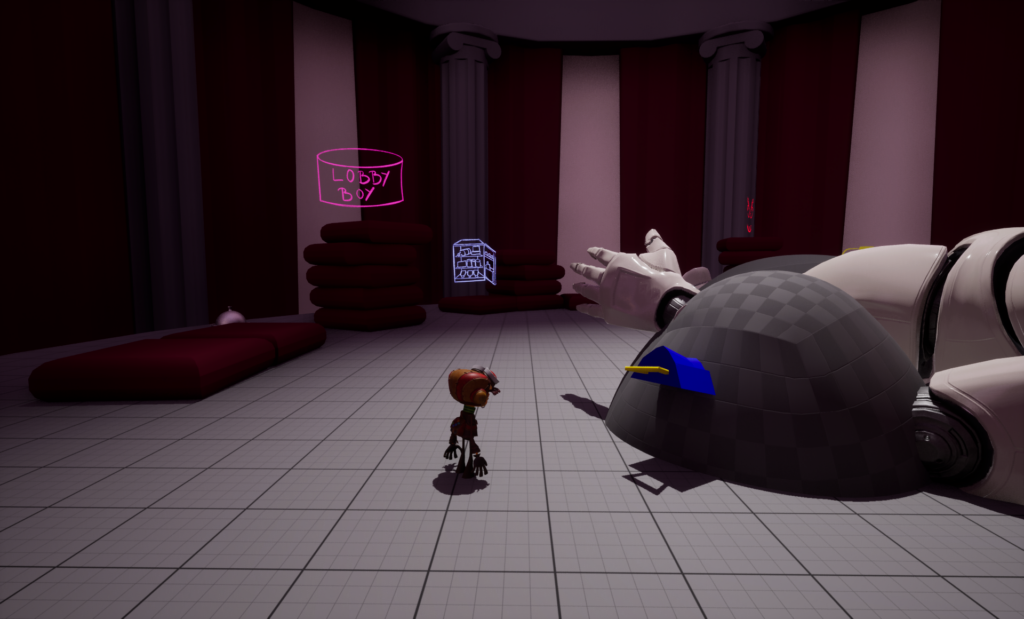
To raise the stakes and create a greater contrast between the player and the hostile environment, I decided to shrink Raz to make the porter appear even more intimidating.
Moodboard & References
Narrative Background
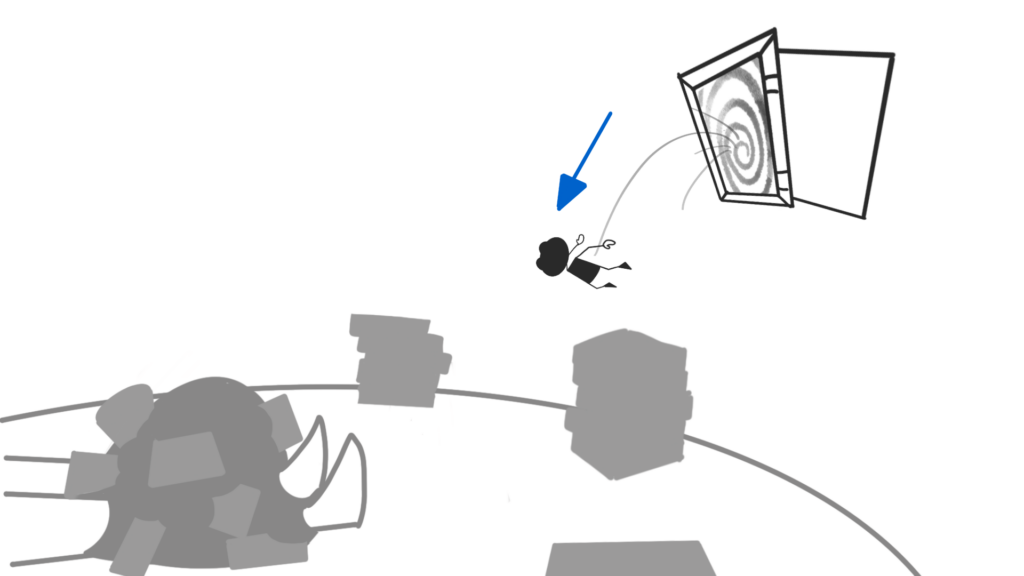
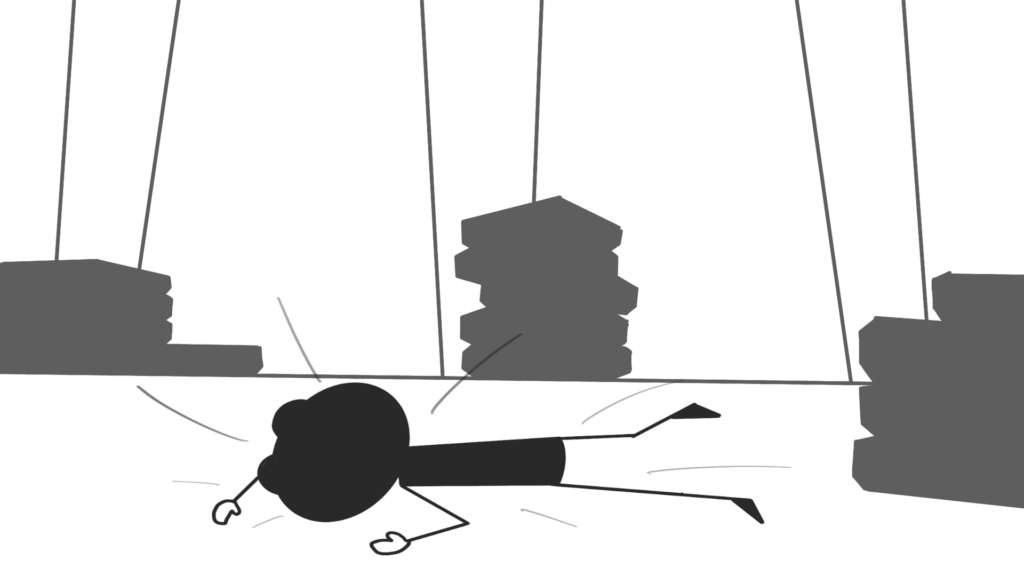
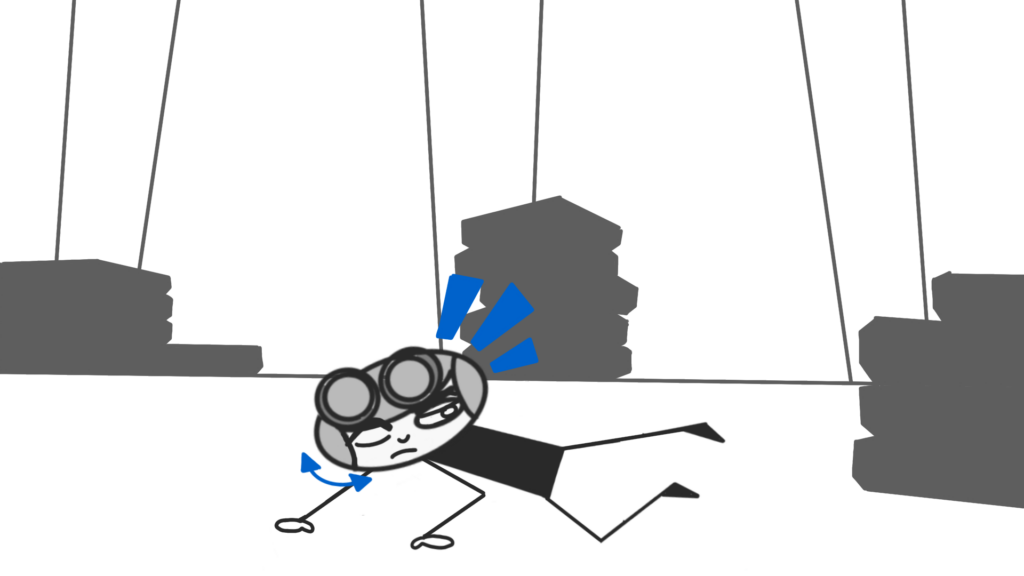
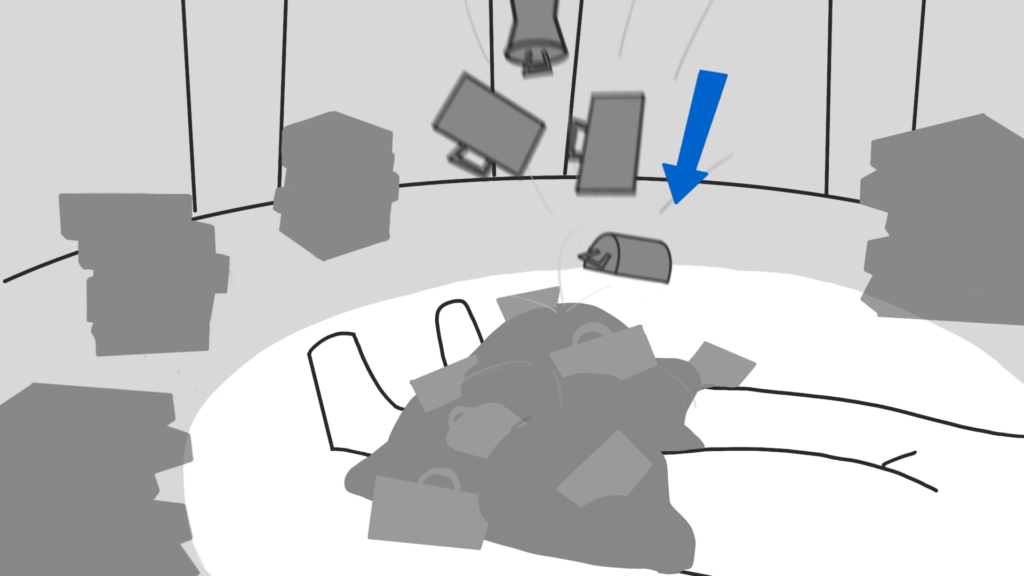
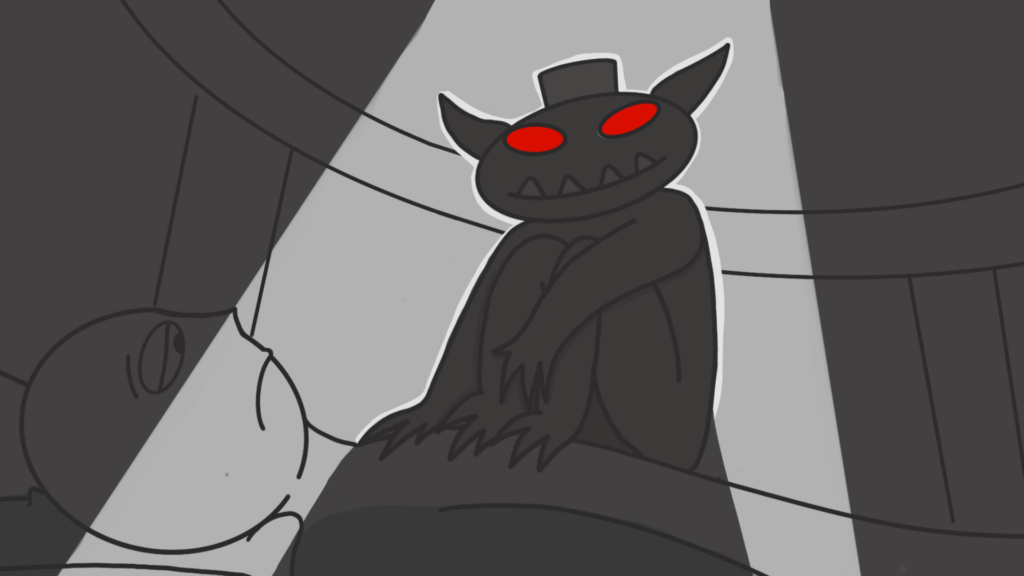
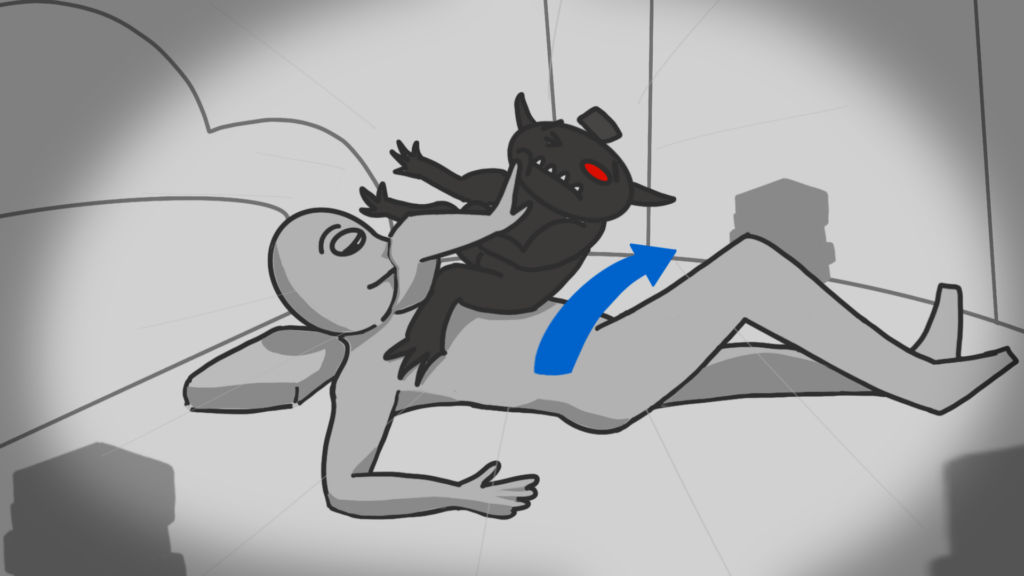
Raz notices that one of his friends is constantly tired. He tells Raz that he finds little rest at night because he keeps worrying about everything, and if he manages to fall asleep, he is plagued by nightmares. Raz offers to investigate and takes a peek inside his friend’s mind. The player then finds themselves in a level displaying all aspects of the NPC’s worrying mind, manifested in the form of a hotel hosting personified fears as guests and unfinished emotional issues as luggage. At the end of the level, the player faces the boss, a demon porter who has stacked emotional baggage onto the NPC and sits on his chest.
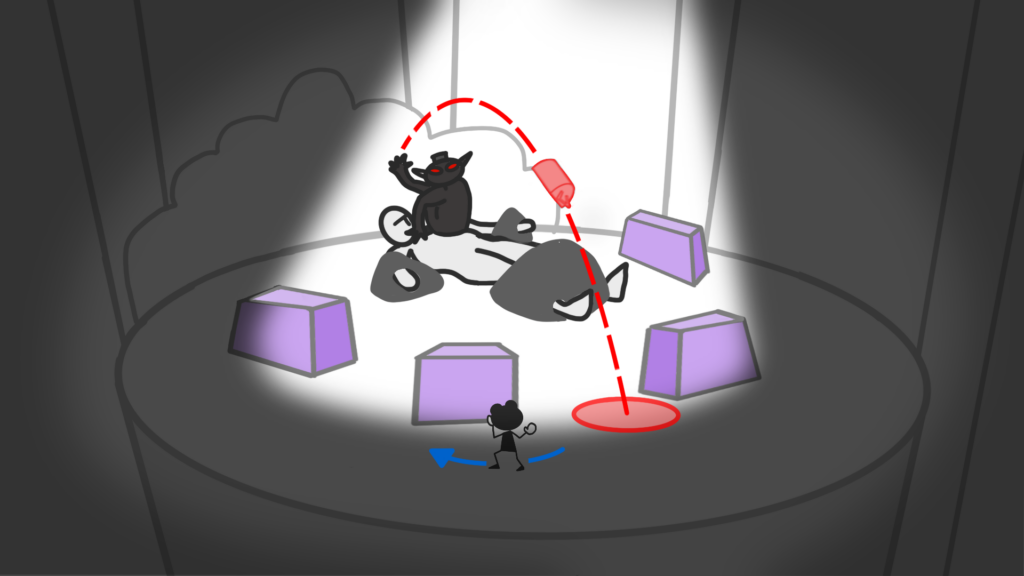
See a rough storyboard for the Boss fight on the right.
Boss Description
The demon porter is a giant goblin creature with purple skin, dressed in a dark red hotel porter uniform, similar to the design of the “Enabler” from Psychonauts 2. Its proportions are a bit toddler- like, with a chubby torso and short limbs. The boss remains stationary on the NPC’s chest and occasionally busts out in a barrage of melee and ranged attacks.
The boss is a blend of the “Controller” and “Stationary mauler” types. He affords both reflex and positioning gameplay challenges to the player.
Controller
- Uses area control attacks
- Arena altering abilities
Stationary mauler
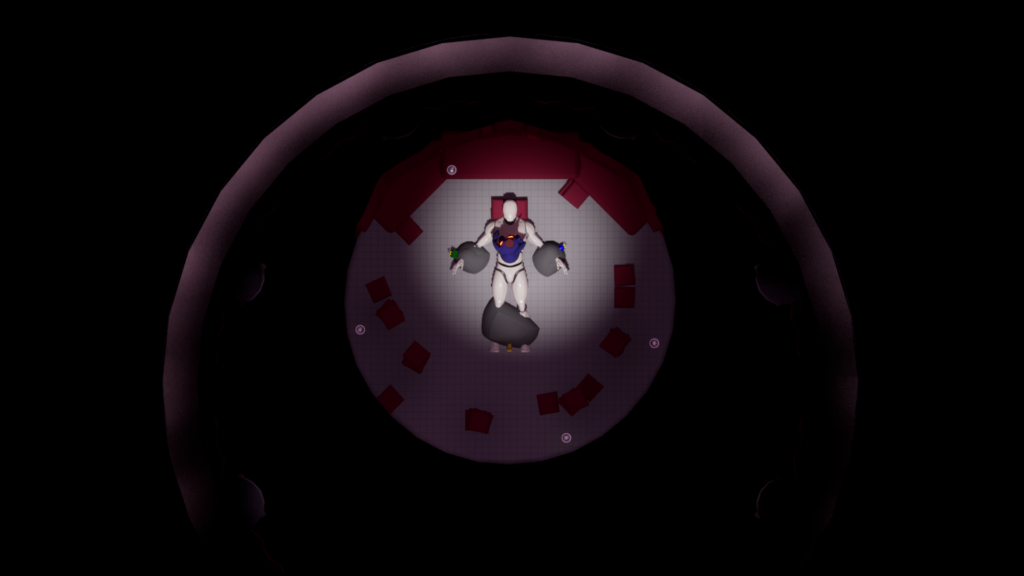
- Stationary in the center of a round arena
- Slam & Sweep attacks
Beat Sheet
Arena Blockout
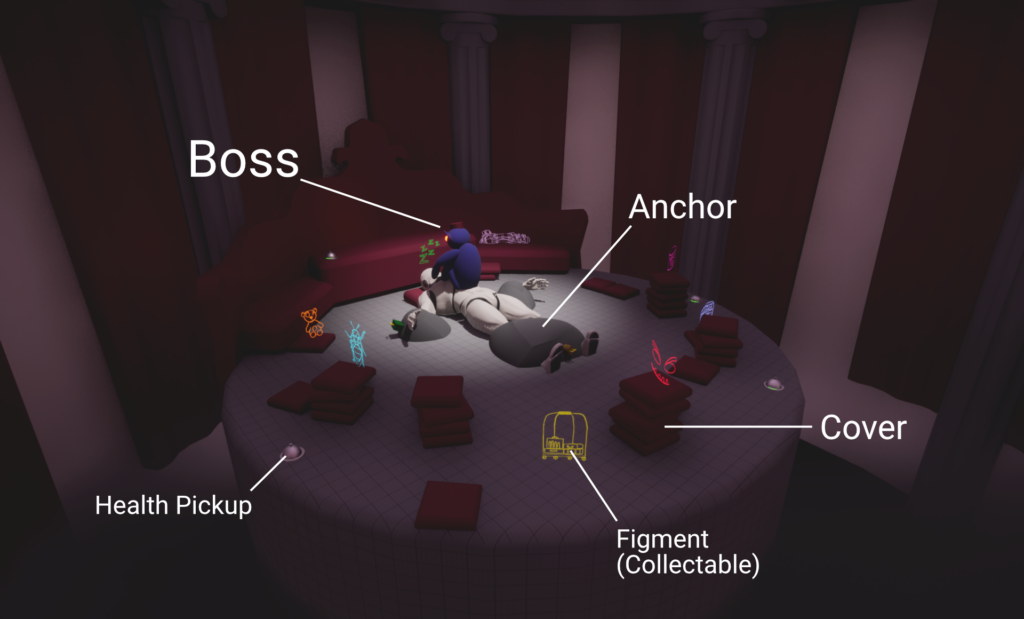
The boss arena is a round hotel bed; players should feel small in contrast to the big foe, but also like they can slip away out of the boss’s sight. Stacks of pillows will give the players cover to hide from attacks and create distance between themselves and their enemies.
Cover (Pillow) – Provides cover from attacks, are destroyed as the boss fight progresses
Anchor (Baggage Pile) – Pin down the NPC, can be dislodged by the player one by one
Health Pickups – Restore health when destroyed, looks like food ordered via room
service
Figments (Collectables)
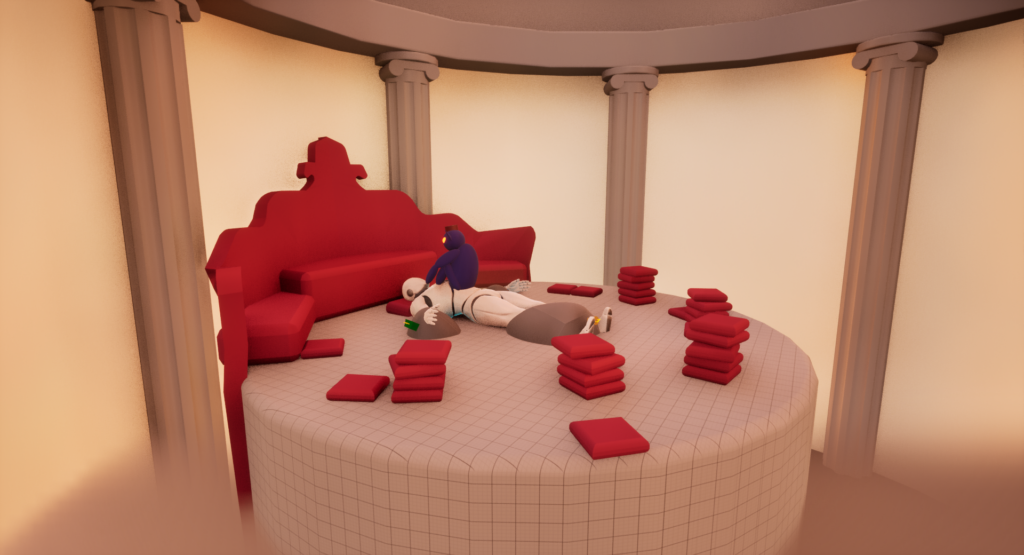
Visually, the arena will mix tacky pastel colored decor and furniture, a la Grand Budapest
Hotel, with a creepy nightmare aesthetic.
Screenshots
Conclusion
The project was a great opportunity to explore what it takes to design a memorable boss fight as well as to take a closer look at the bosses in the Psychonauts franchise. However, as always, there is room for improvement and elements that I would love to iterate on.
The bosses of Psychonauts are often used as a final skill test for newly introduced gameplay abilities, as I only worked with a small selection of abilities and didn’t create any new ones, this aspect is missing in the current design.
Another aspect that the design lacks are opportunities for more complex platforming challenges. This was something that I missed while playing the game’s bosses and would love to have included in my design. I played with the thought of adding more verticality to the arena by adding some sort of chandelier or mobile (kinetic sculpture), but struggled to fit it into the fight without the experience becoming too bloated.
My next steps, if I were to create the boss fight with all its systems, would be to playtest the different stages to falsify if the pacing works as intended.